A visible seam is the most obvious indicator of an artificial turf installation that is failing. When the adhesive bond between two turf sections begins to release, the gap opens progressively—starting as a slight ridge visible only in certain light, progressing to a visible line that catches the eye from the back porch, and eventually becoming a lifted edge that catches on shoes and pet paws, allows debris to pack in, and creates a tripping hazard. Artificial Turf of Celina performs seam repair for installations throughout the Celina area and the Collin County growth corridor, restoring a seamless surface quickly and using adhesive systems designed to perform in North Texas conditions rather than simply holding until the next season.
Celina's environment creates specific seam stresses. The area's hail belt designation means installations experience significant impact events—large hailstones striking a seam zone under tension can stress adhesive bonds that are already approaching the end of their service life. The freeze-thaw cycling that Celina sees in a typical winter, while less severe than northern climates, puts repeated expansion and contraction stress on seam connections at a time when adhesive flexibility is already reduced by cold temperatures. Compaction from foot traffic across seam lines—particularly in the primary walking paths through Celina residential backyards—is relentless and cumulative. These factors combine to make seam repair a regular service need in an area where the installation inventory is growing as fast as the population.
The initial seam separation assessment is critical because it determines whether the appropriate repair is simple re-bonding or a more involved procedure. We probe the seam line from end to end to determine exactly where separation has occurred and where the bond is still intact. We examine the sub-seam backing on both turf sections to assess whether the turf itself has degraded around the bond area, which would indicate a section replacement is more appropriate than adhesive repair. We evaluate whether the separation is recent or has been progressing for an extended period, because long-standing open seams can allow the turf edges to deform away from the original alignment, complicating re-bonding.
For standard seam repairs where the turf is structurally intact and the separation is relatively recent, the process involves cleaning the sub-backing surfaces completely—removing all old adhesive residue that would prevent new adhesive from bonding properly—and applying a professional-grade seam adhesive designed for outdoor artificial turf applications. Consumer-grade contact cements are not appropriate for this application because they lack the flexibility rating needed to survive North Texas temperature swings and UV exposure. We use adhesive systems rated for outdoor performance in this climate and allow proper cure time before the surface returns to use.
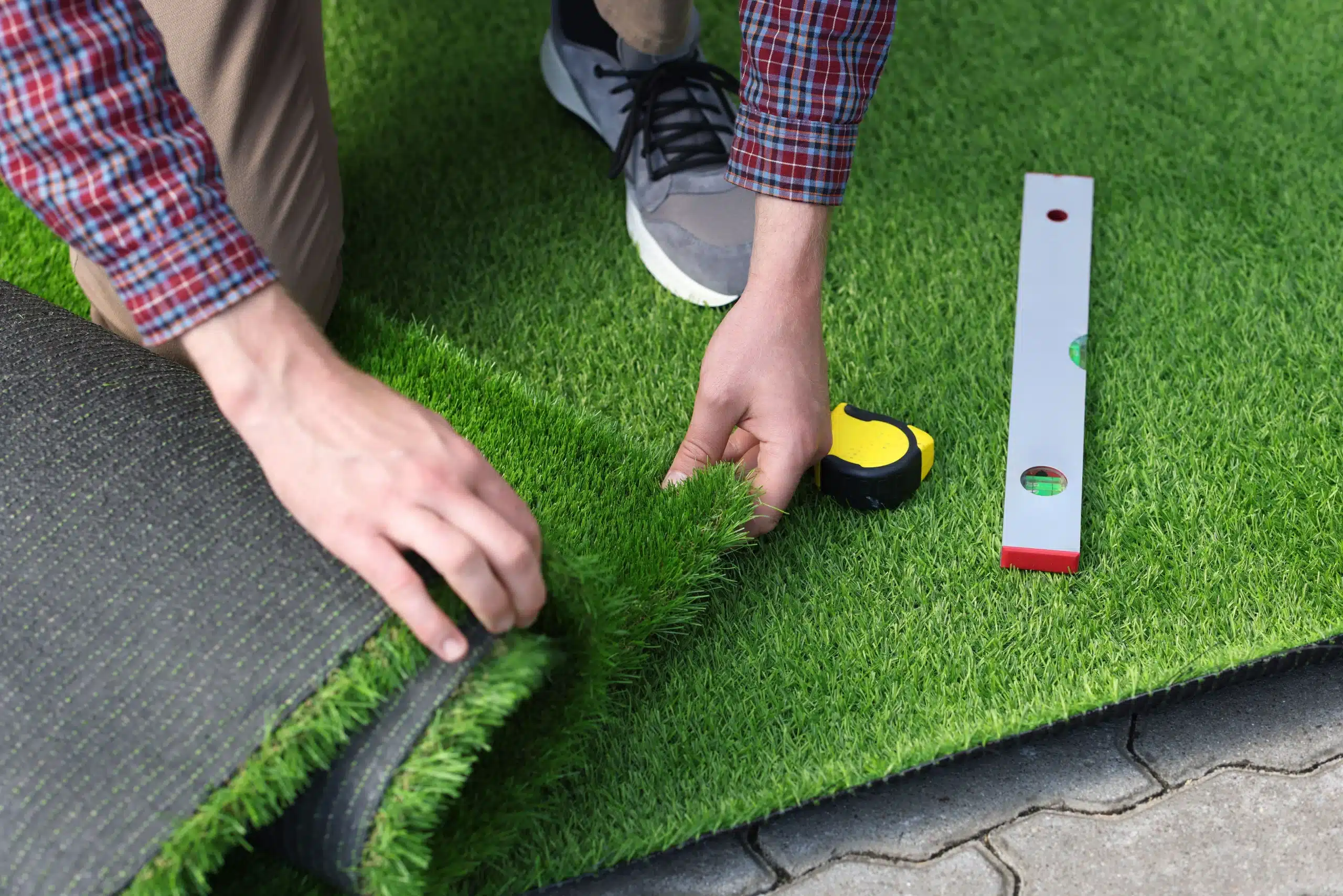
Seam alignment is the most exacting part of the repair. The two turf sections must be brought back together with their fiber patterns aligned—the blade direction on both sides of the seam must be consistent, and the pile height across the seam must match. A re-bonded seam with misaligned fiber direction is visible in certain light angles and difficult to correct after the adhesive cures. We use weighted boards and alignment guides during the curing period to hold the seam in the correct position without movement.
For installations where the seam damage is more severe—torn backing, fiber loss along the seam edge, or extended open-seam periods that have caused deformation—we perform partial section replacement rather than seam repair. This involves cutting back to sound turf material on both sides of the damaged zone, fabricating a replacement patch from compatible material, and bonding it in with clean seam lines on both sides. When done with material that closely matches the fiber color, height, and pile direction of the surrounding turf, these repairs are virtually undetectable after grooming.
Most Celina homeowners notice seam separation through one of three observations: they see the line while mowing adjacent areas or walking the yard, their dog begins pawing at the lifted edge, or their child catches a foot on the ridge while running. All three are legitimate triggers for immediate repair. A small seam separation that costs a two-hour service call grows into a larger problem within a season, particularly if a hail event or freeze cycle occurs before it is addressed.
We service artificial turf seam repairs throughout Celina and the surrounding Collin County communities including Prosper, Frisco, McKinney, Anna, Melissa, Aubrey, and Pilot Point. We work on all major artificial turf brands and installation types.
Benefits
- Professional adhesive systems rated for North Texas temperature extremes and UV exposure—not consumer contact cement
- Full seam-line probing from end to end identifies exact separation extent before repair begins
- Fiber direction alignment checked and corrected during re-bonding to prevent visible light-angle variation
- Weighted curing procedure holds seam position precisely during adhesive set time
- Assessment distinguishes adhesive repair from section replacement based on turf structural integrity
- Section replacement from compatible material produces virtually undetectable results after grooming
- Early repair prevents the progressive opening that makes larger adhesive failures more costly
- Eliminates tripping hazards from lifted seam edges that catch shoes and pet paws
- Prevents debris packing into open seam channels that accelerates base layer deterioration
- Post-repair infill grooming restores surface appearance across the repaired zone
How the process works
- 1Full seam-line probe from end to end—mapped separation extent and structural condition of both turf edges
- 2Determination of repair approach: adhesive re-bond or partial section replacement
- 3Complete cleaning of both sub-backing surfaces—all old adhesive residue removed
- 4Application of professional outdoor-rated seam adhesive to both backing surfaces
- 5Careful fiber-direction alignment on both sides of the seam before adhesive contact
- 6Weighted board and alignment guide placement during full cure period
- 7Infill addition to seam zone if displaced during separation or repair process
- 8Power brush grooming across seam to blend fiber direction on both sides of bond line
- 9Final visual inspection from multiple angles including sightlines from home entry points
- 10Homeowner documentation of repair location and recommendations for preventing recurrence
Frequently asked questions
How quickly does a small seam gap become a large problem?
A small gap can remain stable for months during dry, mild conditions but can open significantly within a single hail or freeze event if the adhesive is near the end of its bond strength. We recommend addressing any visible seam separation promptly rather than monitoring it through another season.
Will the repair be visible after grooming?
A properly re-bonded seam on intact turf is virtually invisible after grooming because the fiber is still present and correctly aligned. Section replacement repairs using closely matched material are also very difficult to detect after power broom grooming. The quality of alignment during cure is the determining factor.
Do you service seams on turf you did not originally install?
Yes. We assess and repair seams on all major artificial turf brands and installation types regardless of who performed the original work. We evaluate the installation condition honestly and recommend the appropriate repair approach.
How long does a seam repair take?
The active repair work on a single seam typically takes two to three hours. Adhesive cure time adds several more hours before the surface should receive normal foot traffic. We schedule repairs to allow cure time before the area is returned to use, and we provide specific guidance on when the repaired zone is ready.