
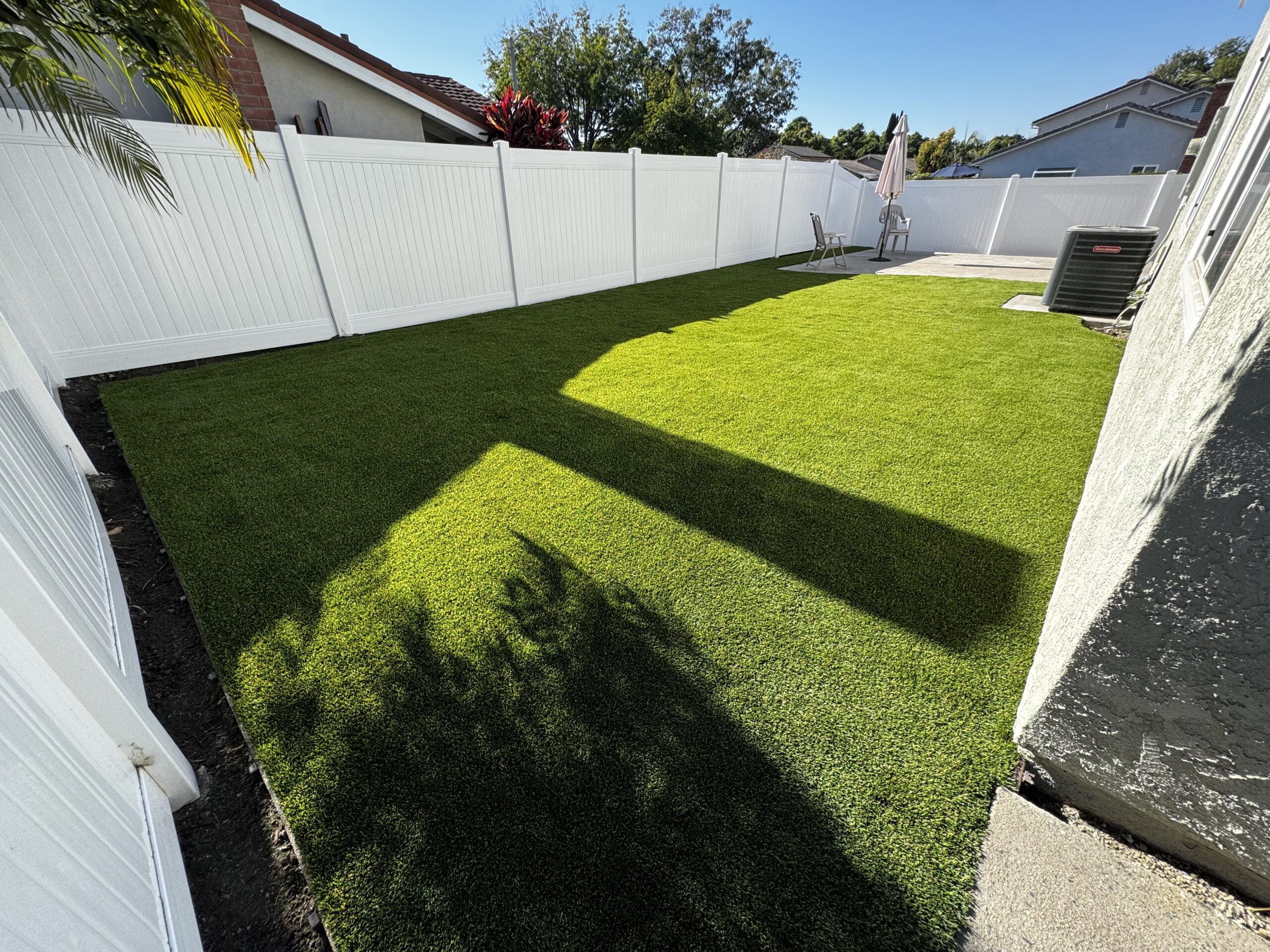
Artificial Turf of Celina's infill replenishment service addresses turf installations across the Celina area and the broader Collin County growth corridor that have aged past the point where routine brushing restores adequate performance. The signs that prompt homeowners to call us are usually visible without needing a professional assessment: fibers that no longer stand upright after foot traffic, areas where the turf backing is visible through the pile, uneven surface texture, or reduced cushioning when walking across the yard. Pet turf installations show a more urgent signal—drainage performance that has slowed to the point where surface rinse water pools briefly before percolating through.
The assessment process begins at the surface and works downward. We measure infill depth at multiple points across the installation—center, perimeter, and identified high-traffic zones—using a probe that tells us where depletion is concentrated. In most Celina residential installations, we find the greatest loss in the primary walking path between the back door and the main use area of the yard, followed by pet bathroom zones, and lastly along the downwind perimeter edges where infill migrates during spring storm season.
Infill type matching is important. We identify what was originally installed—silica sand, zeolite, or a hybrid blend—and replenish with compatible material. Mixing incompatible infill types creates inconsistent surface behavior and can disrupt the drainage architecture of the base system. For pet installations where the original infill was a standard silica sand and odor has become a concern, we discuss upgrading partially or fully to a zeolite blend during replenishment, which significantly improves ammonia management without requiring any base work.
The replenishment process uses professional drop-spread equipment rather than manual distribution. Broadcast spreading achieves more consistent infill depth than bag-pour methods, and we follow distribution with a power broom pass that works the new material down to the fiber base and integrates it with existing infill. This step is not optional—infill that sits on top of the fiber tips rather than at the base does not support the blades properly and migrates back out quickly.
For commercial installations on the 289 corridor and in Celina's growing office and retail parks, infill depletion often occurs faster than owners expect because foot traffic volume is higher and maintenance schedules are not always as regular as residential properties. A commercial turf entry plaza or amenity area that has lost significant infill will show visible fiber matting in concentrated patterns that are noticeable to tenants and customers. Replenishment restores both function and appearance.
We offer infill replenishment as a standalone service and as part of our annual and seasonal maintenance programs for both residential and commercial properties throughout the Celina market.
Benefits
- Compatible material matching—silica, zeolite, or hybrid blend to match the original installation system
- Professional drop-spread equipment delivers more consistent depth than manual bag-pour methods
- Zeolite upgrade option during replenishment improves ammonia management in pet yard installations
- Power broom integration step works new material to fiber base rather than leaving it at the surface
- Pre- and post-service depth measurements create a documented maintenance record
- Drainage performance restored in pet zones where infill compaction has slowed liquid percolation
- Surface cushioning returns in high-traffic areas where reduced infill depth has flattened feel underfoot
- Fiber blade upright position restored—eliminates the matted appearance that characterizes depleted turf
How the process works
- 1Surface condition assessment: fiber position, visible backing, texture consistency, cushioning feel
- 2Infill depth probing at multiple zones: center field, primary traffic path, pet areas, perimeter edges
- 3Original infill type identification for compatible material matching
- 4Volume calculation based on measured depletion across the installation
- 5Infill type selection discussion—standard match or zeolite upgrade where applicable
- 6Professional drop-spread distribution across full installation area
- 7Targeted hand distribution in perimeter zones and tight areas where equipment cannot reach
- 8Power broom pass to integrate new infill to fiber base
- 9Post-service depth verification measurements at same probe points
- 10Written summary of pre- and post-service depth data and recommended future replenishment timeline
Frequently asked questions
How do I know my Celina turf needs infill replenishment rather than just brushing?
The clearest signals are fibers that stay flat after foot traffic rather than recovering, visible backing through the pile in high-traffic areas, reduced cushioning feel underfoot, and pet zone drainage that has slowed noticeably. A depth probe assessment during our service visit gives a definitive measurement.
Can you upgrade my standard silica infill to zeolite during replenishment?
Yes. For pet yards where odor management has become a concern, we can replenish with a zeolite blend rather than matching the original silica sand. The zeolite captures ammonia compounds at the fiber base between rinse cycles. We discuss this option at the assessment stage.
How long does replenishment take for a typical Celina residential yard?
Most residential installations in the 1,500–3,000 square foot range are completed in two to four hours including assessment, distribution, broom integration, and final measurement. Larger yards or those with significant depletion across the full installation take proportionally longer.
How often should infill be replenished in a high-use pet yard?
Pet yards in Celina with active dogs typically need infill assessment every two to three years. Standard residential yards without pets can often go four to five years. Commercial installations with heavy foot traffic may need replenishment annually. Actual rate depends on yard size, traffic volume, and seasonal conditions.
Will replenishment fix drainage problems in my Celina yard?
If drainage slowdown is caused by infill compaction in the fiber layer, replenishment can significantly restore drainage performance. If the problem originates in the base aggregate layer rather than the surface infill, we identify that distinction at assessment and discuss the appropriate repair approach.