
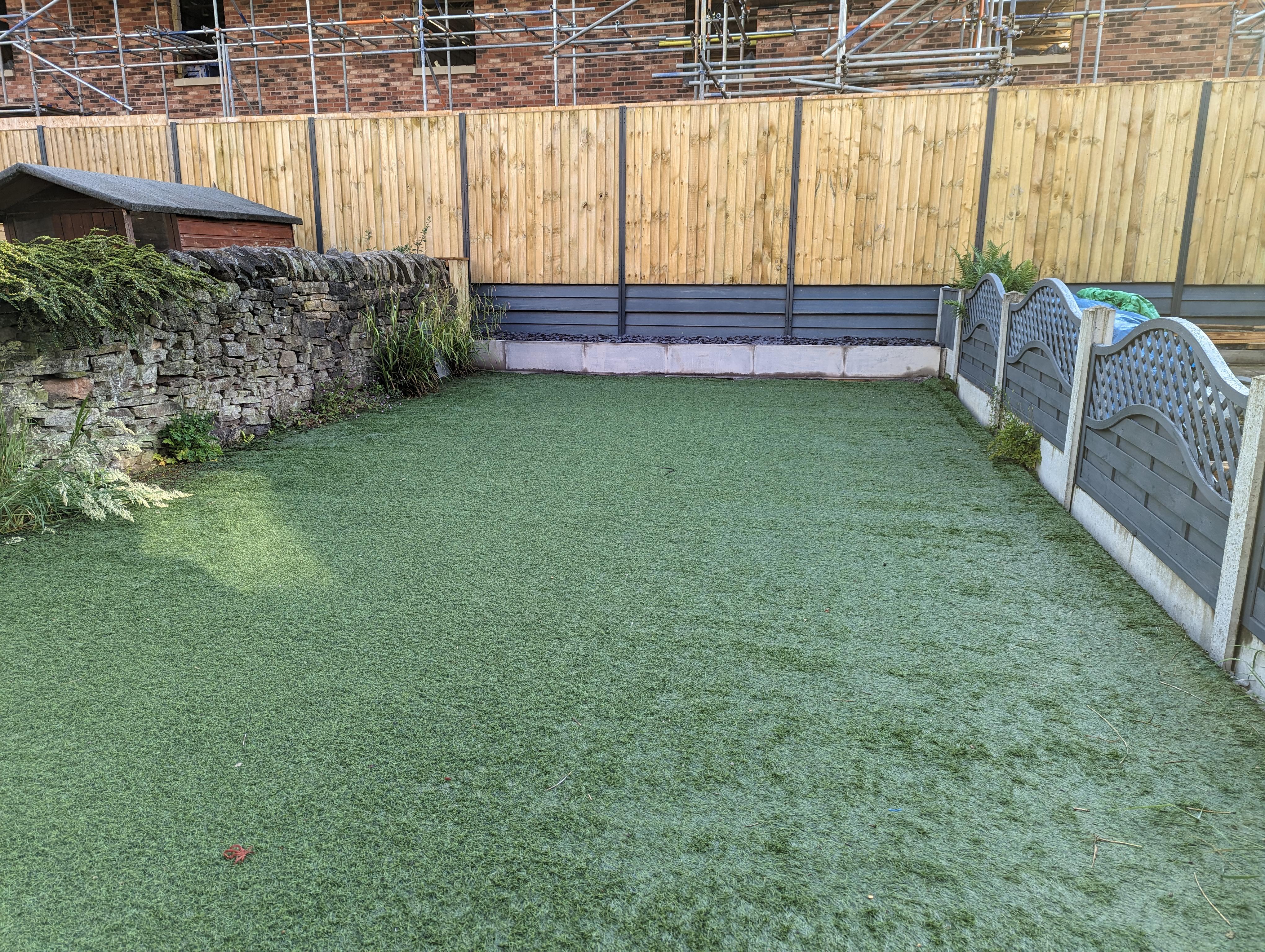
The first step in a replacement project is an honest evaluation of what is there and why it is failing. We do not assume that old turf is always replaceable and new turf is always the solution. Some installations look poor on the surface because the infill has depleted or the fibers need professional grooming—those are maintenance situations, not replacement situations, and we say so clearly. But when the backing has deteriorated, when seams are failing across multiple zones, when the product is a generation old with fiber technology that has been significantly surpassed by current manufacturing, or when the original installation had base problems that have caused cascading surface performance issues—those are replacement situations, and honest assessment says so.
The evaluation covers four layers: the turf surface itself, the seams, the perimeter edges, and the base. Surface evaluation checks for backing integrity, fiber matting that cannot be restored by grooming, and color degradation from UV exposure. Seam evaluation checks bond integrity across all seam lines, not just the ones showing obvious separation. Perimeter evaluation checks edge anchoring and the transition treatment against hardscape or landscape features. Base evaluation—which requires lifting a section of turf—checks aggregate depth, compaction, drainage path function, and whether the base grade has maintained positive slope toward drainage points over time.
When replacement is the right answer, the process starts with removal. We remove the existing turf and staging material carefully, keeping the work area contained and disposing of old material appropriately. If the base is in good condition—aggregate properly graded, drainage function intact—we salvage it, which reduces project cost and timeline. If the base has problems that contributed to the surface failure, we address them during replacement rather than installing new turf on a compromised foundation. This distinction is critical: new turf on a bad base is a replacement project that will need another replacement in five years.
Base reconstruction when needed follows our full installation standard: properly graded crushed aggregate at the depth specified for the site's soil type and use pattern, geotextile weed barrier, and positive drainage slope toward defined outfall points. For lots in Celina's newer construction phases where clay-heavy fill soil is the substrate, we pay particular attention to aggregate depth and drainage path design because these are the conditions that cause base failures in lighter installations.
Product selection for replacement is an opportunity that the original installation may not have had. Current artificial turf products offer meaningful advances over products from a decade ago: more realistic fiber color variation, improved UV stabilization, cooler surface temperatures from non-rubber infill systems, more durable backing materials, and enhanced antimicrobial performance in pet applications. We walk through current product options with every replacement client, explain what has changed since the original installation, and help match the product to the specific use case—children's play yard, pet yard, outdoor living space, or putting green.
The installation process applies professional-grade seam adhesive, not the lighter-duty products that were used in some of Celina's early installation wave. Every seam gets bonded with adhesive rated for outdoor North Texas conditions and positioned away from primary pedestrian traffic lines. Perimeter edges receive appropriate treatment for the adjacent material—whether that is concrete curb, flagstone, landscape steel border, or existing mulch beds.
One of the most common replacement projects we see in the Celina market is from homeowners who moved into an existing home with artificial turf that the previous owner installed. They inherit an installation they did not choose, with no documentation on product, installation date, or maintenance history. We evaluate these installations on their objective condition and give an unbiased assessment of whether repair is viable or replacement is the better path.
Residential replacement service is available throughout the Celina area and across the broader north Collin County growth corridor.
Benefits
- Honest evaluation distinguishes maintenance situations from genuine replacement needs—no upsell on salvageable installations
- Full four-layer assessment: surface, seams, perimeter edges, and base—not just surface visual inspection
- Base salvage when condition allows reduces project cost and installation timeline
- Base reconstruction when needed addresses the root cause of failure—not just the visible surface symptoms
- Current product selection offers UV stabilization, fiber realism, and antimicrobial performance advances over products from a decade ago
- Professional-grade seam adhesive systems rated for North Texas temperature cycling and UV exposure
- Seam positioning away from primary pedestrian paths reduces future bond stress
- Appropriate perimeter edge treatment for each adjacent material type—concrete, flagstone, landscape steel, or mulch
- Assessment service for inherited installations with no prior documentation
- Clay-heavy Collin County soil conditions addressed explicitly in base reconstruction specifications
How the process works
- 1Surface evaluation: backing integrity, fiber matting assessment, UV color degradation extent
- 2Seam integrity probe across all seam lines including intact-appearing zones
- 3Perimeter edge assessment: anchor condition and transition treatment at all adjacent materials
- 4Base evaluation: aggregate condition, drainage function, and grade slope maintenance—requires lifting a turf section
- 5Replacement vs. repair determination with explanation of reasoning and estimated cost comparison
- 6Product selection walkthrough: current fiber technology, UV ratings, infill options, antimicrobial performance
- 7Existing turf removal and disposal; base salvage or reconstruction decision
- 8Base work as required: aggregate refresh, grade correction, geotextile installation
- 9Turf installation with professional adhesive seaming and perimeter edge treatment
Frequently asked questions
How do I know if my Celina artificial turf needs replacement or just maintenance?
The clearest replacement indicators are backing deterioration (the material below the fiber pile is cracking, flaking, or separating from the fiber), widespread fiber matting that does not recover after professional grooming, seam failures across multiple locations rather than a single repair-able zone, and turf age beyond fifteen years combined with any of the above. Infill depletion, surface pollen accumulation, and single seam separation are maintenance situations, not replacement situations.
Can the base from my original installation be reused?
Often yes, particularly if the original installation used proper aggregate depth and the base has maintained its grade. We evaluate the base before deciding—this requires lifting a section of turf, which we do as part of the assessment. Salvaging a sound base reduces project cost measurably.
I bought a Celina home with artificial turf I know nothing about. Can you assess it?
Yes. This is a common situation in Celina's resale market as homes with turf installed during the early growth wave are now changing hands. We evaluate the installation objectively and give you an honest assessment of its remaining service life, what issues exist, and what options make sense—repair, targeted replacement, or full replacement.
How much better are current artificial turf products than what was installed ten years ago?
Measurably better in several ways: fiber color variation is more realistic, UV stabilization ratings are higher (meaning color holds longer), non-rubber infill systems run significantly cooler on summer afternoons, and backing durability has improved. For pet applications, built-in antimicrobial technology is more effective than the surface-applied treatments that were standard in earlier products.
How long does a residential replacement take?
Most residential replacements in the typical Celina lot size range are completed in three to five days when the base can be salvaged. Projects requiring base reconstruction take four to seven days depending on scope. We provide a specific timeline at the end of the assessment phase.